


DIY HVAC Maintenance Tasks You Should and Shouldn’t Do Yourself

When summer temperatures climb, your air conditioner may seem like it is running nonstop. Then you notice one room feels warmer than the others, the airflow seems weaker, or your latest electric bill is higher than expected. Naturally, you start searching for a quick solution.
The good news is that several DIY HVAC maintenance tasks can improve airflow, support energy efficiency, and reduce unnecessary strain on your cooling system. However, there is an important line between routine maintenance and HVAC repair. Some jobs are safe for homeowners, while others involve refrigerant, gas, or high-voltage electrical components and should always be handled by a qualified technician.
Here is what you can safely check yourself, what you should leave to the professionals, and when it is time to call Innovative Comfort Solutions.

Why Mid-Summer DIY HVAC Maintenance Matters
During the cooling season, your HVAC system works harder and runs longer than it does during milder weather. That additional workload can reveal problems that were less noticeable earlier in the year.
A dirty air filter, blocked air vents, debris around the outdoor unit, or a clogged condensate drain can interfere with proper airflow and make it difficult for the system to keep your home comfortable. You may begin to notice uneven cooling, longer operating cycles, increasing energy costs, or higher energy bills.
Regular maintenance can help keep your system operating efficiently while reducing the risk of expensive repairs and emergency service calls. It can also support better indoor air quality and help extend the lifespan of your HVAC units.
That does not mean every problem has a safe DIY solution. Knowing when to stop is one of the most important parts of responsible HVAC system maintenance.
HVAC Maintenance Tasks You Can Do Yourself
The following maintenance tips are generally safe for homeowners, provided you follow your equipment manufacturer’s instructions and turn off the system when appropriate.
Check and Change the Air Filter
Changing filters is one of the easiest and most beneficial HVAC maintenance tasks you can complete.
A clogged air filter restricts airflow, allowing less cool air to move through your home. Your AC system may then run longer to reach the thermostat setting, increasing energy costs and placing additional strain on the blower motor.
During periods of heavy use, check the air filter regularly—typically once a month. How often you need to change air filters depends on your filter type, household size, pets, allergies, and indoor air quality.
When replacing filters:
Confirm the correct filter size.
Pay attention to the airflow arrow printed on the filter.
Choose a filter with a rating appropriate for your HVAC system.
Avoid assuming that the most restrictive filter is automatically the best choice.
Using an overly restrictive filter can reduce airflow, especially if your system was not designed for it. If you are unsure which HVAC filters to use, ask an HVAC professional for a recommendation.
Keep Air Vents and Return Grilles Clear
Walk through your home and inspect the supply vents and return grilles. Make sure they are not blocked by rugs, furniture, curtains, toys, or storage boxes.
You can also use a vacuum or soft cloth to remove visible dust from the vent covers. Keeping vents clear helps ensure proper airflow and allows conditioned air to circulate more evenly.
Avoid closing several vents in an attempt to push cold air into another part of the house. Your heating and cooling system is designed to move a certain volume of air. Closing too many vents can increase pressure inside the ductwork and contribute to uneven cooling or system strain.
If one area of your home is consistently uncomfortable despite open, unobstructed vents, the cause may be a ductwork, insulation, airflow, or equipment-sizing issue that requires professional evaluation.

Clear Debris Around the Outdoor Unit
Your outdoor AC unit needs room to release the heat collected from inside your home. Grass clippings, leaves, weeds, mulch, and other debris can obstruct airflow around the condenser coils.
Turn the system off before working near the equipment. Remove loose debris and trim vegetation to maintain approximately two feet of clearance around the outdoor unit whenever possible.
Be careful when performing this DIY maintenance. The metal fins surrounding many air conditioning units are delicate and can bend easily. Do not push tools through the protective grille or remove equipment panels.
Keeping the outdoor unit clean and unobstructed can support system efficiency and help your air conditioner perform more reliably during extreme heat.
Gently Rinse Surface Dirt From the Condenser
If the exterior of the outdoor unit is dusty, you may be able to gently rinse away loose surface debris using a garden hose. First, shut off power to the unit according to the manufacturer’s instructions.
Use gentle water pressure and direct the water across the exterior surface. Never use a pressure washer. High-pressure water can bend the fins and damage the condenser coils.
Do not remove panels, reach inside the unit, or attempt a deep coil cleaning yourself. If the coils are heavily clogged, greasy, bent, or difficult to access, professional air conditioning maintenance is the safer option.
Check Your Thermostat
Before assuming you have a major AC problem, check the thermostat.
Confirm that:
The thermostat is set to “cool.”
The selected temperature is below the current room temperature.
The fan is set to “auto” rather than “on.”
The display is working properly.
The batteries do not need to be replaced.
Setting the fan to “on” makes it run continuously, even when the air conditioner is not actively cooling. This can make the air coming from the vents feel warmer between cooling cycles.
Also, lowering the thermostat dramatically will not make your home cool down faster. It may simply make the system run longer. A programmable or smart thermostat can help manage temperature settings and improve energy efficiency without placing unnecessary demand on the equipment.
If the system starts and stops unexpectedly or does not respond to your settings, thermostat malfunctions or another HVAC issue may be responsible.
Look for Condensate Drain Problems
As your air conditioning system removes humidity from the air, moisture exits through the condensate drain. Clogged drain lines can cause water to collect around the indoor unit and may eventually lead to water damage, mold growth, or a system shutdown.
You can visually inspect the area around the condensate drain for standing water, algae, or obvious blockages. Keep the area clean and accessible.
Some homeowners can clear condensate drains using methods specifically approved by the equipment manufacturer. However, avoid pouring bleach, harsh drain cleaners, or other chemicals into the line without professional guidance.
If the drain repeatedly clogs, water is leaking around the air handler, or you cannot safely reach the line, call an HVAC technician.
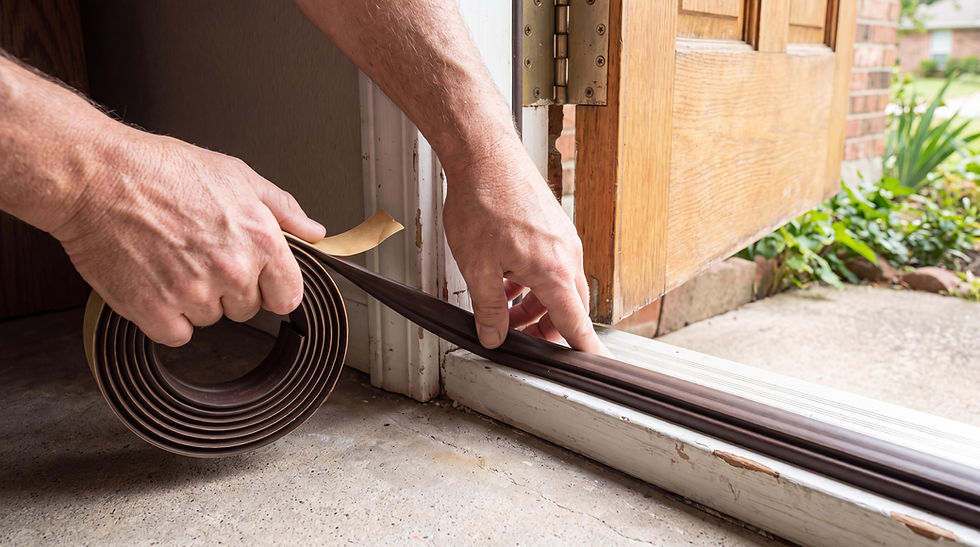
Reduce Heat Gain Inside Your Home
This is not technically a repair, but it can help your HVAC system keep up during the hottest part of the day.
Try these simple strategies:
Close blinds or curtains on sun-facing windows.
Use ceiling fans in occupied rooms.
Avoid using the oven during peak afternoon heat.
Run heat-producing appliances later in the evening.
Make sure exterior doors and windows are completely closed.
Replace damaged weatherstripping around doors when needed.
Ceiling fans do not lower the temperature of a room, but the moving air can help you feel cooler. Remember to turn them off when no one is using the room.
These steps reduce the demand on your cooling system, but they will not correct refrigerant leaks, damaged parts, or other mechanical problems.
HVAC Tasks You Should Not Do Yourself
DIY HVAC maintenance should be limited to accessible cleaning, filter replacement, thermostat checks, and basic visual inspections. The following jobs carry electrical, chemical, mechanical, or combustion-related risks.
Handling Refrigerant or Trying to Repair a Leak
Refrigerant levels do not normally drop because the refrigerant was “used up.” Low refrigerant often points to a leak that must be located and repaired.
Possible signs of refrigerant leaks include:
Warm air coming from the vents
Ice on refrigerant lines or the indoor unit
Hissing or bubbling sounds
Long cooling cycles
A home that never reaches the thermostat setting
Unusually high utility bills
Refrigerant work requires specialized tools, training, and proper handling. Do not purchase a DIY recharge kit or attempt to add refrigerant yourself. Incorrect charging can damage the compressor, reduce system efficiency, and create safety or environmental concerns.
Repairing Electrical Connections or Components
Air conditioning units contain high-voltage electrical connections and components that can remain dangerous even when the equipment appears to be off.
Do not attempt to replace or repair:
Capacitors
Contactors
Control boards
Internal wiring
Motors
Breakers
Disconnects
Repeated breaker trips, buzzing sounds, burning odors, intermittent operation, or a system that will not start should be evaluated professionally. Continuously resetting a tripped breaker can increase the risk of equipment damage or an electrical hazard.
Opening the Indoor or Outdoor Unit
Removing access panels may expose electrical components, moving parts, sharp edges, and delicate equipment. It can also create warranty problems if the work results in damage.
Homeowners should not attempt to disassemble the indoor unit, outdoor unit, air handler, heat pump, or gas furnace. Internal testing and repairs should be completed by a trained technician.
Cleaning Evaporator Coils or Internal Components
The evaporator coils are usually located inside the indoor equipment and can be difficult to access. The blower motor and other internal components are also easy to damage when cleaned incorrectly.
Using the wrong chemicals, tools, or techniques can harm the coils, wiring, drain pan, insulation, or nearby components. If buildup inside the system is affecting airflow or cooling, schedule professional HVAC maintenance.
Repairing Motors, Fans, or Compressors
Grinding, squealing, rattling, banging, or buzzing sounds may point to a motor, fan, belt, bearing, compressor, or electrical problem.
Continuing to run the system can turn a smaller repair into a much more expensive one. Shut the system down and contact a technician rather than reaching inside the equipment or trying to secure moving parts yourself.
Performing Gas Furnace or Heat Exchanger Repairs
Gas furnace maintenance and repair require specialized training. Never attempt to repair burners, gas valves, fuel lines, safety controls, or the heat exchanger.
A damaged heat exchanger can create a risk of carbon monoxide leaks. Because carbon monoxide is colorless and odorless, every home with fuel-burning equipment should have functioning carbon monoxide detectors.
If a carbon monoxide alarm sounds, leave the home and contact emergency services or the appropriate utility provider. If you smell gas, leave immediately and follow your gas provider’s emergency instructions.
Popular “Quick Fixes” That Can Cause Costly Repairs
Online HVAC troubleshooting advice can make a complicated repair appear surprisingly simple. Unfortunately, the wrong shortcut can lead to higher repair costs, voided warranties, or personal injury.
Avoid these common mistakes:
Pressure-washing condenser coils
Adding refrigerant without locating a leak
Closing multiple vents to redirect air
Installing an overly restrictive filter
Pouring harsh chemicals into drain lines
Continuously resetting a tripped breaker
Running an AC unit with frozen coils
Removing access panels to inspect electrical parts
Bypassing a safety switch
Ignoring unusual noises or burning odors
If a suggested fix involves refrigerant, gas, high-voltage electricity, internal parts, or safety controls, it is not a suitable DIY project.
When Should You Call an HVAC Technician?
It is time to schedule professional service when:
The air conditioner runs constantly but does not cool the home.
Warm air is coming from the vents.
Airflow is noticeably weak.
Some rooms experience persistent uneven cooling.
Ice develops on the coils or refrigerant lines.
The system repeatedly turns on and off.
The circuit breaker continues to trip.
Water collects around the indoor unit.
You notice musty, burning, or electrical odors.
The system makes grinding, squealing, banging, or buzzing sounds.
Your energy bills rise without an obvious explanation.
The system stops working during extreme heat.
Calling early may help prevent a minor problem from becoming a complete breakdown. It can also reduce the likelihood of costly repairs or an unexpected HVAC replacement.

What Is Included in Professional HVAC Maintenance?
A professional maintenance visit goes well beyond what can safely be included on a homeowner’s HVAC maintenance checklist.
Depending on the equipment, a technician may:
Inspect and tighten electrical connections
Test electrical components
Check refrigerant levels and look for leaks
Inspect and clean evaporator and condenser coils
Test the thermostat
Evaluate temperature differences and airflow
Inspect the blower motor and fan
Check the condensate drain and drain pan
Inspect the heat pump or air conditioner
Examine gas furnace components
Check the heat exchanger when applicable
Test safety controls
Identify worn or failing parts
Confirm that the system is operating efficiently
Annual HVAC maintenance gives a technician an opportunity to catch developing problems before they cause an emergency. For many households, preventative maintenance also supports peak performance, better energy efficiency, and more predictable maintenance costs.
How Often Should HVAC Maintenance Be Scheduled?
Most homeowners benefit from professional HVAC preventative maintenance at least once a year. Homes with separate heating and cooling equipment may benefit from seasonal maintenance and air conditioning maintenance before the cooling season and heating or heat pump maintenance before colder weather.
The best schedule depends on your system, its age, the manufacturer’s requirements, and how heavily it is used. Older HVAC units may need closer attention than a new HVAC system.
Yearly maintenance does not guarantee that a part will never fail, but it can improve reliability and reveal problems before they lead to expensive repairs or premature HVAC replacement.
Frequently Asked Questions About HVAC Maintenance
What HVAC maintenance can homeowners do themselves?
Homeowners can generally replace air filters, clear blocked vents, check thermostat settings, remove debris from around the outdoor unit and look for visible condensate drainage problems. Refrigerant, electrical, gas and internal mechanical work should be left to an HVAC professional.
What are common professional HVAC maintenance services in Atlanta?
Professional HVAC maintenance commonly includes checking refrigerant levels, inspecting electrical connections, cleaning coils, testing the thermostat, evaluating airflow, examining the condensate drain and checking the system for worn or failing components.
How often should I have my HVAC system serviced in Atlanta?
Most Metro Atlanta homeowners should schedule professional HVAC maintenance at least once a year. Many systems benefit from twice-yearly service: air-conditioning maintenance before the cooling season and heating maintenance before colder weather.
How much does HVAC maintenance cost in Metro Atlanta?
The cost depends on the system type, number of units, equipment condition and services included. A maintenance visit may also cost less when covered by an HVAC maintenance plan. Contact Innovative Comfort Solutions for current pricing based on your home and system.
Know the Difference Between Maintenance and Repair
Replacing filters, clearing vents, checking thermostat settings, and removing debris from around the outdoor unit are practical ways to care for your HVAC system. These simple tasks can support proper airflow, improve comfort, and help control energy costs.
Repairs involving refrigerant, gas, internal electrical connections, motors, compressors, evaporator coils, or a heat exchanger require professional knowledge and equipment. When in doubt, stop and call a technician.
Is your AC system struggling to keep your home comfortable during the summer heat? Innovative Comfort Solutions can inspect your equipment, identify the real cause of the problem, and recommend the right solution—without guesswork.
Contact Innovative Comfort Solutions today to schedule annual maintenance, diagnose a cooling problem, or get your system back to reliable, efficient operation.


Comments